
An international research group led by Associate Professor Tomoaki Ishiyama of Chiba University succeeded in the world’s largest dark matter structure formation simulation using all CPU cores of the national astronomical observatory supercomputer “Atelui II”, and simulated more than 100 terabytes. The data has been published on the Internet cloud. Currently, large-scale astronomical survey observations using the Subaru Telescope of the National Astronomical Observatory of Japan are underway, but in order to extract and verify a lot of information from the observations, a huge simulated catalog of galaxies and active galactic nuclei is required. This data is positioned as basic data for that purpose, and will be useful for research aimed at elucidating the large-scale structure of the universe and galaxy formation.
The results of this study were published in the Monthly Notices of the Royal Astronomical Society published by the Royal Astronomical Society of the United Kingdom in September 2021.[credit]
Simulation: Tomoaki Ishiyama
Visualization: Hirotaka Nakayama
National Astronomical Observatory 4D Digital Space Project[Press release]
国立天文台天文シミュレーションプロジェクト(CfCA)
The world’s largest “simulated universe” is released-Toward the elucidation of the large-scale structure of the universe and galaxy formation-
https://www.cfca.nao.ac.jp/pr/20210910
Category: Education
About education underachievement…
It hurts whoever it hurts, the reality is that we are very much to blame for this…..Despite a legislation that “encourages” the facilitatism, we do nothing against it, on the contrary, we follow it, because otherwise we get “problems” to ourselves. However, we forget that facilitatism, despite pleasing students and parents (and the country as well), does not promote knowledge or quality. So we are not helping, quite the contrary. Helping is not the same as pleasing. If someone has an accident and needs (e.g.) physiotherapy, these exercises hurt and cost a lot… There is no pity, they have to be done, for the good of the person…With school it’s the same thing , we have to demand, even if it hurts, because the results will come later. There’s no pity and arranging “strategies” that are just a way of throwing sand in your eyes (results strategies are easy… effective knowledge strategies are what’s difficult). It’s necessary to demand from the students and not feel sorry for them (in terms of grades)… Then the result is that the students have grades (but not the corresponding knowledge), they enroll in secondary school, then discover they “never did have any teeth” in them. When the exams arrive, the debacle is even greater, as they are not prepared for it. Generally speaking, they blame the “exams”, and the opinion of the less “enlightened” is then to end the exams. This is not a solution, it will only cover up a reality. It is necessary to fight this reality and not hide it… And the fight must pass with more national exams. Only then will there be homogeneity of knowledge at the national level, only then will students become more committed, only then will teachers be concerned with effectively preparing students and not giving grades, based on theories of the bullshit that the commitment has to be seen… You have to look at the participation… You have to look at the enthusiasm… You have to look at the socio-economic reality and other nonsense. These things ARE important, but never as important as KNOWING AND KNOWLEDGE.
Carlos Tavares in educare.pt (2003)
This is not how we help students, nor is this how we prepare them for the harsh reality of society and the world of work. I would like to see what the great advocates and supporters of those theories would say if one day they were (e.g.) going to put the car in a garage and the car left the same (or worse) than when it entered. They couldn’t and wouldn’t have the right to complain about anything, because possibly the person in charge of the workshop would use the same arguments as they did…“But the mechanic STRIVED… And was EXCITED to do that. He spent the entire afternoon around the car… Poor, he’s poor, the family has difficulties… The father comes home (when he arrives) drunk… If the car was not fixed, he has to be patient… He is very participative here in the workshop and very friendly…» Of course, this example can be extended to the most varied activities and professions… Even those of teaching…. Imagine the “upholstery” of some of these future teachers… They won’t get there, some say…. We’ll see, we’ll see…..
I want to trust again!
I was raised on common moral principles:
When I was little, mothers, fathers, teachers, grandparents, uncles, neighbors were authorities worthy of respect and consideration.
The closer or older, the more affection.
It was unthinkable to answer rudely to elders, teachers or authorities…We trusted adults because they were all fathers, mothers or relatives of the children in our street, in our neighborhood, in our city…
We were only afraid of the dark, of frogs, of horror movies…Today it gave me an infinite sadness for all that we lost.
For everything my grandchildren will one day face.
For the fear in the eyes of children, young people, old people and adults.Human rights for criminals, unlimited duties for honest citizens.
Not taking advantage of everything means being an idiot.
Paying debts in good time is being silly…
Amnesty for corrupt and thieves…What happened to us?
Mistreated teachers in classrooms, traders threatened by drug dealers, bars on our doors and windows.What values are these?
Cars that are worthy more than hugs, daughters wanting plastic surgery as a passing gift
of year…
Cell phones in children’s backpacks.What do you want for a hug?
The fun is worth more than a diploma.
A giant TV it’s worth more than a good conversation.
Make up is worth more than ice cream.
Better to appear than to be…When did everything disappeared or became ridiculous?
I want to rip the bars off my window so I can touch the flowers!
I want to sit on the porch and sleep with the door open on Summer nights!
I want honesty as a source of pride.
I want uprightness of character, a clean face and an eye-to-eye look.
I want shame in my face and solidarity.
I want hope, joy, confidence!I want to shut up someone who says: “we have to be at the level of…”, when talking about a person.
Below the “HAVE”, live the “BE”
And live the return of true life, simple as rain, clear as the spring sky, light as the morning breeze!
And definitely beautiful, like all dawns.I want to take back my simple and common world, where love, solidarity and fraternity exist as core values.
Let’s go back to being “people”!
The indignation at the lack of ethics, morals, respect…
Build a better, fairer, more human World, where people respect people.Utopia?
Who knows?…
We need to try…Our children deserve it and our grandchildren too, they will certainly thank us!
Unknown author
Maybe starting by forwarding or sharing this message…
Joe Bell
A must-see film. Reid Miller’s performance is astonishing and Mark Wahlberg too.
The only tiny detail that it could make it even better is a bit flaws during the story telling… But it still ca brings us to our knees with this true story.
And it made me write something about one of humanities worst nature, not accepting the diference… Sad but still so damn true…
One of the biggest scourges at school is bullying. The difficulty that human beings have in accepting the difference is something that transcends me. Why do we all have to be the same? Why is the supposed normality established in society? What is it really like to be normal?
Zé-Tó
Everything that escapes the conception of a hypocritical, selfish and individualistic society, which is governed by social position, not looking to talent, to the struggle for personal achievement where sometimes difficulties are disqualified, but by the need to focus at any cost, destroys many a dreams, many struggles and unfortunately many lives.
Some people have become parasites, as they tend to live with the urge to be known at all costs, whether for the values he has, good and bad, or for the prominence of power, which adds nothing to their existence, just inflating their pedantry. They have nothing to give, but they think they are all that others need.
Unfortunately, and with the dawn of the Internet, of the idea of a global village, of the union of all, the reverse side of the coin was and is being very hard. Each time an individual centrism is denoted, each one sees himself as better than the other, that only what he/she says and writes is the absolute truth, where opinion becomes the rule… And with all the risks that this entails, if lives are lost, the supposed normality is further delimited.
Normal is a person to be happy, normal is a person to live with others, normal is to live in line with nature, normal is to respect, normal is to live and let live, normal is to fight for human rights, normal is a powerful word that only it must so simply mean openness and respect.
Let us live our lives and let each other live theirs.
Respect, tolerance, acceptance, friendship, will… Words that must be part of each one of us.
Let us be happy in our oneness. We are unique and in this way we make humanity brighter and more beautiful.
Letter to Tenant
Letter to the Tenant (no mistake, it’s for you),
Read, it takes only 2 minutes or so.
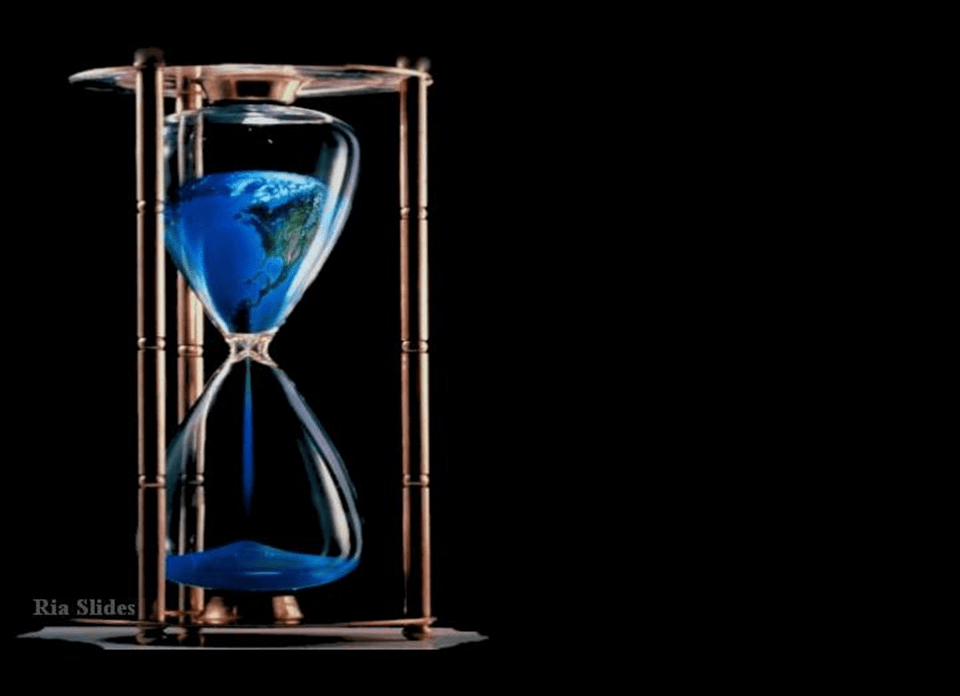
I inform you that the lease we made thousands of years ago is about to expire.


It’s too high!
How do you spend so much?

We need to renegotiate your use.
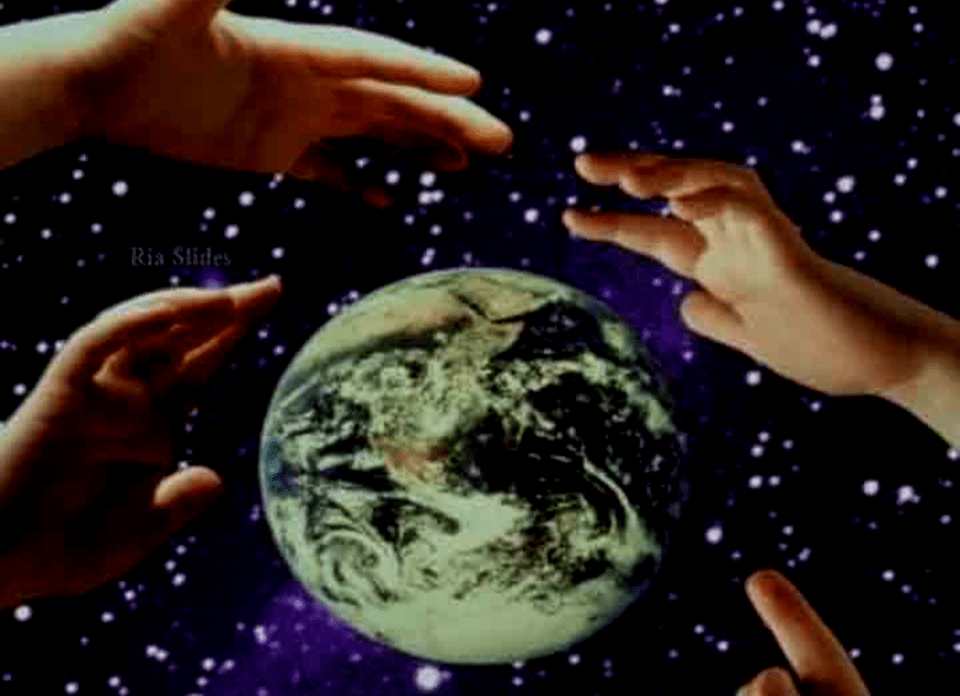
If you take good care of the land, there will be food for everyone!

The sun is very hot and the heat has increased.
Think about starting to plant them again!

I looked for some animals and didn’t find them. When I leased you the house they existed…

Did you catch them all? NOT?! So where are they?

I don’t see blue!
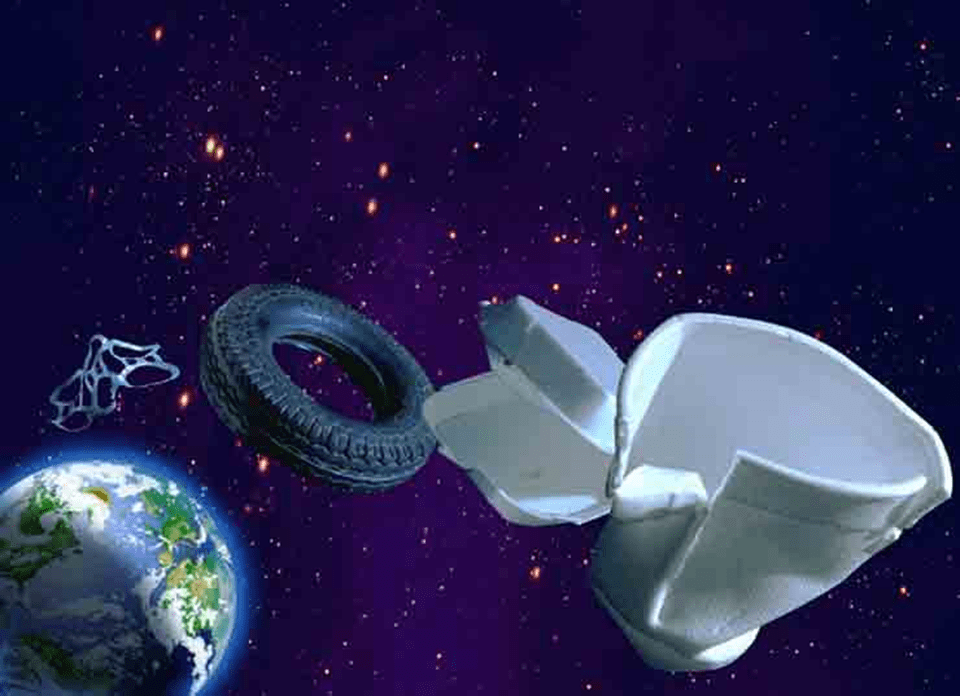
I found strange objects along the way! Tires, plastics… what is this?
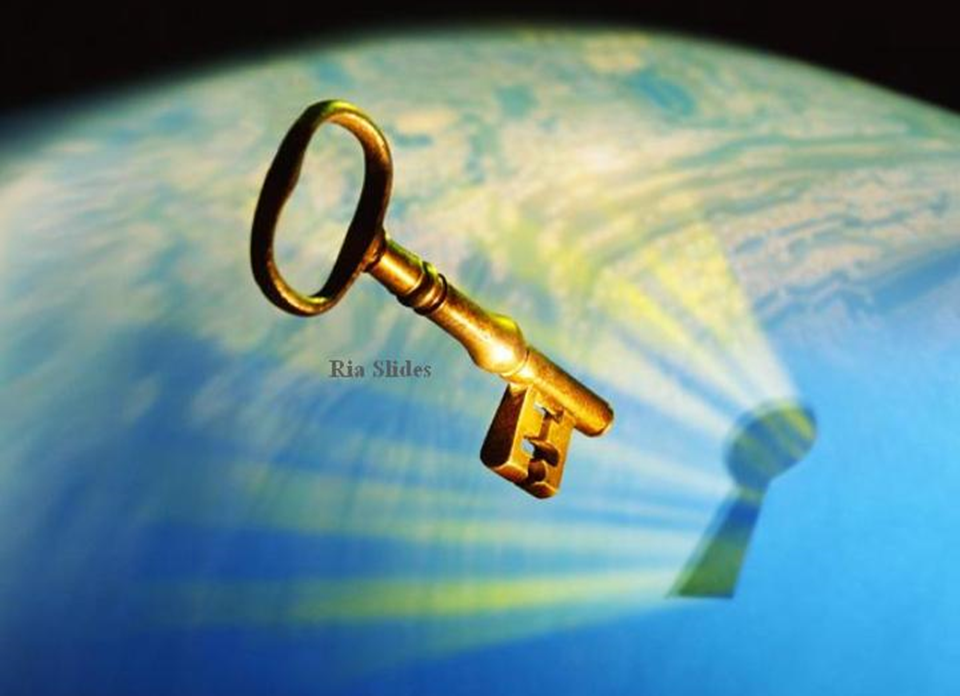
If so, what do you want to do to fulfill the contract?
I wish you were always with me but everything has a limit.

I await your answers and attitudes….

Your house,
Earth
From the PowerPoint presentation “Carta al inquilino” by Pequeñas Semillitas
Pilates for the brain
Read to the end, it’s very interesting.
Are you forgetting?
“What’s the name of this film in which the artist who appears is beautiful?…
Yes man! Tall, with black hair. The one who sometimes worked with that wonderful actor he calls himself… who worked on a very famous play.
You already know who I’m talking about, don’t you?”

From the age of thirty, in general, we start to notice that we have little forgetfulness:
- What’s this boy’s name? I know him so well.
- What time was the meeting, at 5:00 or 5:30?
- This, how did they tell me it worked?
- My keys, where did I leave them?
- What floor am I parked on?
But nothing like when we exclaim…
“They stole my car!” Without realizing that we left through another door of the shopping center.

With terror, we think that the brain is starting to turn to jelly and we are worried about becoming like this elderly aunt, who remembers in small details everything about her childhood, but cannot remember what she did yesterday or even this morning.

There are many myths where people mistakenly link age with poor memory.
Neuroscientists have proven that:
Short-term memory loss is not due to the age or death of neurons, which die but regenerate, but to the reduction in the number of connections between them, of neurons or dentrites (branches of neurons).

It’s very simple. Just as an unused muscle atrophies, dentrites also atrophy if they don’t bind often, and the brain’s ability to receive new information is reduced.
Admittedly, exercise helps a lot to alert the mind; there are also vitamins and medicines that enhance and strengthen memory.
However, there’s nothing like making our brain manufacture its own food: Neurotrophins.
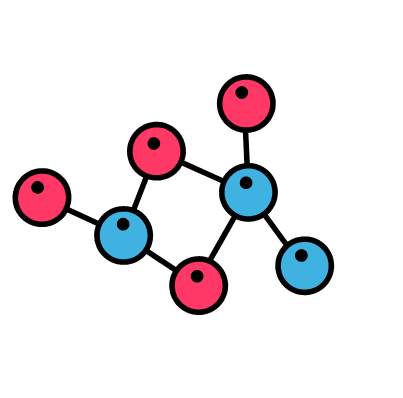
They are molecules that produce and secrete nerve cells and act as food to stay healthy.
The more active the brain cells are, the more neurotrophins they produce and this creates more connections between different areas of the brain.

What we need is to do pilates with the neurons:
– stretch them,
– surprise them,
– get out of your routine,
– introduce them to unexpected news and fun through emotions, smell, sight, touch, taste and hearing.
The result? The brain becomes more flexible, more agile, and your memory capacity increases.

I read, work, exercise and a thousand other things during the day. So my mind must be very stimulated.
The truth is that most of our lives become a series of routines…
Think of a common, running day or week.
What’s different about your daily routine?
The way to work, the time you eat or return home, the time you spend in the car, the time and programs you watch on television?

They make the brain work automatically and require a minimum of energy.
Experiences go through the same neural pathways already formed.
There is no production of neurotrophins.

- TRY at least once a week to take a shower with your eyes closed. Just by touching it, locating the taps, adjusting the water temperature, picking up soap, shampoo or shaving cream. You’ll see how your hands will notice textures you never noticed before.
- USE NON-dominant hand. Eat, write, open the toothpaste, brush your teeth, open the drawer with the hand that costs you most to use.
- READ out loud: different circuits will be activated, in addition to the ones you use to read silently.
- CHANGE your routes, go through different paths to go to work or home.
- CHANGE your routine. Do different things. Go out, meet and talk to people of different ages, jobs and ideologies. Experience the unexpected. Use the stairs instead of the elevator. Go out into the field, walk, hear yourself.
- CHANGE the location of some things. It knows where everything is, the brain has already built a map. For example, move the trash can, and you’ll see the number of times you’ll dump it in the old place.
- LEARN a skill. Anything: photography, cooking, yoga, studying a new language. If you like puzzles or pictures, cover one eye to lose depth perception, so the brain has to trust and look for other routes.
- IDENTIFY objects. Place a container with several different coins in the car and feel with your hand so that, while you are standing at a traffic light, try to identify each one with your fingers.
Why don’t we open our minds and try these simple exercises that, according to Duke University Medical Center Neurobiology studies, expand our memory?
Hopefully, we’ll never ask again:
“Where did I leave my keys?”
You can find the original PPT here: https://pt.slideshare.net/ncosta24/pilates-para-o-crebro translate by JVC (zecord). Couldn’t find the original.
 Estranged Blog