Wonders of modern architectureThe Cybertecture Egg – Mumbai, IndiaGrand Lisbon – Macau, ChinaBullring & Grand Central – Birmingham, United KingdomBMW Welt – Munich, GermanyMoPOP Museum (Museum of Pop Culture) – Seattle, USAMumbai Convention Centre – Mumbai, IndiaSage Gateshead – Gateshead, United KingdomUSAFA Cadet Chapel – Colorado, USAUniversum Bremen – Bremen, GermanyFuji TV Building – Tokyo, Japan30 St. Mary Axe aka The Gherkin – London, United KingdomLotus Temple – Delhi, IndiaNational Centre of the Performing Arts – Beijing, ChinaBanknote Building – Kaunas, LithuaniaPalais Bulles – Cannes, FranceThe Auditorio de Tenerife “Adán Martín” – Canary Islands, SpainThe Seashell House – Isla Mujeres, MexicoTorre Galatea – Figueres, SpainCurve House – Sopot, PolandTerracotta House – Leyva, ColombiaCathedral of Brasília – Brasilia, BrazilCape Romano Dome House – Florida, USAEarth House – Lostorf, SwitzerlandThe Eden Project – Cornwall, United KingdomChapel of the Holy Cross – Arizona, USADruzhba Holiday Center Hall – Yalta, RussiaPalais Idéal du Facteur Cheval – Hauterives, FranceOlympic Stadium – Montreal, CanadaNational Library of Republic of Belarus – Minsk, BelarusWonderWorks Pigeon Froge – Tennesse, USASteam World Museum – Gramado, BrazilThe Piano Building – Huainan, ChinaGreat Mosque of Djenné – Djenné, MaliChang Building aka Elephant Building – Bangkok, ThailandThe Dancing House aka Fred and Ginger – Prague, Czech RepublicKunsthaus Graz: Contemporary Art – Graz, AustriaLa Tête Carrée – Nice, FranceCasa do Penedo – Fafe, PortugalRipley’s Believe it or Not – Ontario, CanadaSnail House – Sofia, BulgariaHouse Attack – Vienna, AustriaHằng Nga Guesthouse – Da Lat, VietnamHabitat 67 – Montreal, CanadaSutyagin House – Anchangelsk, RussiaCube House – Rotterdam, NetherlandsHeliodyssee: Grand Four Solaire of Odeillo – Odeillo, FrançaFlintstone House – California, USARobert Harvey Oshatz – Oregon, USABunker House – Illinois, USABeijing National Stadium aka Bird’s Nest – Beijing, ChinaEND…
Breathtaking buildings, where architecture meets its zenith… But this is just a glimpse of architecture zenith in the World.
This amazing place is in Ecuador and belongs to the Galapagos archipelago. This unbelievable shallow water lagoon in the middle of the sea is a food court for millions of flamingos.
2 – Nyiragongo Crater – Africa
It is the largest lava lake in the world.
3 – Navagio Beach – Greece
It is one of the most beautiful beaches on the planet. Bathed by the crystal-clear sea, this beach is on the edge of the escarpment of a gigantic rock. As if Nature didn’t make the place special enough, a sunken ship in the middle of the beach completes the dream look. This beach is on the island of Zakynthos, and attracts thousands of wealthy tourists who arrive aboard cruise ships, sailboats and million-dollar speedboats.
4 – Havasu – Arizona Falls – USA
Here is a place as spectacular as it is inaccessible. To get to this unbelievable waterfall in the middle of the Arizona desert, you just need to travel by plane, by car and finally by horse. There is also a helicopter that takes people there. This place is located on the Havasupai Indian Reservation in the Grand Canyon National Park.
5 – Mont Saint Michel – France
One of the most interesting places on Earth is Monte San Michel, which at certain times is engulfed by water and reveals the splendor of the construction. It is located in a medieval town called Avranches. There is the monastery that gives the place its name. This monastery, fortified in the 13th century, integrates a group of three cities whose fortifications and development are remarkable: Aigues Mortes (1270-1276), meeting point of the Crusaders heading for the Holy Land; Carcassone, famous for its defences and Avignon, Christendom’s alternative seat (1309-1377). These fortified cities, called “bastide” marked the frontiers of the kingdoms at the end of the Middle Ages, serving as elements of defense and giving the people new social opportunities. More than 300 were built in France alone, between the years 1220 and 1350.
6 – Death Valley – California– USA
In Death Valley (one of the driest places on Earth) is the place called Playa Death Valley. There, a strange phenomenon takes place. For years the phenomenon has intrigued people. It was the mystery of the walking stones. It is a huge open area, which contains some stones that over the years and years have left a trace in the ground, as if they were walking. The tracks curve, change direction and sometimes get in the way. The place is definitely one of the weirdest known to men.
7 – Pamukkale – Turkey
It is a set of thermal pools that descend in the form of a cascade on a hill located in the Hierapolis – Pamukkale site, UNESCO World Heritage Site in Turkey. Pamukkale means “cotton castle” in Turkish. Looking at it seems to be cold, by the impression that it is snow, however, the water contained in these basins is hot! The scientific explanation for this phenomenon is that the thermal places located below the mount cause the spillage of calcium carbonate, which solidifies on the surface, as if it were marble. The place is totally suitable for swimming and the landscape is phenomenal! The effect of erosion by water over time was giving the hill varied forms, molding it in incredible and even bizarre ways, that keep changing continuously. Both the water and the “waterfalls” change color according to sunlight, resulting in a spectacular effect! Without a doubt one of the most beautiful places in the world.
8 – The steps of India– India
Known as Baoli Stepwell, they are unusual architectural formations found in western India and Pakistan as well. The steps seem infinite, and this was done because, depending on the time of year, the amount of water in the reservoirs varied. The look of the place gives it an incredible, almost dreamlike appearance.
9 – Blue Lake Cave – Bonito – Brazil
The Blue Lake Cave is one of the most beautiful places in Brazil. So much so that it is in a place called Bonito, in Mato Grosso do Sul. By the way, Brazil has so many fantastic places that it was impossible to choose just one. I’ll have to make a post only from Gumps places in Brazil. But just take a look at the beauty of the place that this cave is, where the light tinges a blue that looks like a badly done special effect because it is so beautiful. Drooling!
10 – Palau – Micronesia
By far, Palau is one of the most beautiful and exotic corners on the planet. The crystal clear sea, the rocks covered with vegetation, so many islands that it’s impossible to count. It looks like 3D, but it’s real.
An amazing compilation, even though there are other amazing places left out from this selection, which was not made by me, but had to be shared! Hope you enjoy it… And dream a bit for the next escape after this pandemic is over!
Icelanders don’t have a nickname, they use a handy system by which they match the son’s name with the father’s in each generation. At the same time, families do not identify themselves by a nickname or family branch, something very different from what we are used to.
There is no private health or education, public services are so good that there are no complaints. More books are bought per inhabitant than in any other country. They invented the Icelandic sagas, the most similar to a novel.
Geyser is one of the few Icelandic words exported to the world through English, which incorporates the ending to refer to the well-known geological phenomenon that occurs on the island and which is almost universally used.
The Icelandic language is only used in Iceland and is very similar to some Scandinavian languages, especially Old Norwegian.
It is not a very populated country, it has 360 000 inhabitants, half of them concentrated in the capital – Reykjavik – being one of the countries with the most concentrated population in the world and the safest.
It is a pioneer country in terms of implementing democracy. Presumably it has the oldest democratic system in the world, founded some 1000 years ago. In 1996 gay marriage was legalized.
In Iceland, water (from rain and nature reserves) is so abundant and uncontaminated that what is consumed reaches homes without any type of treatment. The large number of thermal sources provides an efficient and inexpensive heating system for homes. In Summer there are 24 hours of light.
Winter is not as cold as you might think, due to the relation of its latitude and the moderation of the ocean. The daytime temperature is around 0°C. Volcanic-type underground channels provide free hot water. There are 33 volcanoes and it is the country with the most and largest documented volcanic eruptions.
Iceland is the only NATO country that does not have armed forces, which were abolished in the 13th century. Only a tiny fraction of the country’s 679 police – a crisis unit called The Vikings – use guns. The annual murder rate is less than five and the total amount of the imprisoned population is 118. Iceland has the highest density of mobile phones per capita in the world. There are more mobile phones than inhabitants, and ¾ of the population has an Internet connection.
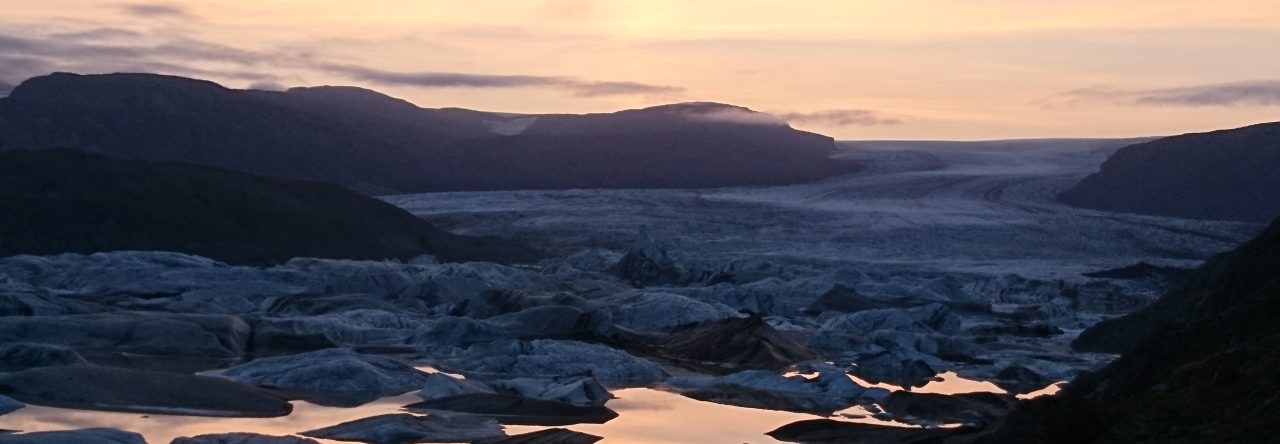
Iceland from spaceBlue Lagoon fenceIceland’s blue skyBlue calcite, close to a geothermal phenomenon.Cookie IslandExploring the Valleys Beyond and the Akureyri Fjords
GULLFOSS
Gullfoss, the Golden Cascade, is a cataract located on the Hvítá River in southeastern Iceland. It is one of the most popular attractions in the country. It is located on the wide bed of the Hvítá river, which runs to the south and a kilometer from the waterfall turns abruptly to the east, falling in three curved steps. At that moment, the water falls in jumps: 11 and 21 m, in a crack 32 m deep, some 20 m wide and 2,5 km long. The average flow in this cataract is 140 m³/s in Summer and 80 m³/s in Winter. The maximum measured water flow is 2000 m³/s. When the visitor approaches the waterfall, the crevice hides the view, giving the feeling that the mighty river simply disappears underground.
GullfossVolcanoJokulsarlon LagoonLandmannalaugar or People’s PoolsMountains and Lake Frostastadavatn in South HighlandNorse Gods in MoonfallStreets of Reykjavik at sunset.Abandoned Church in Icelandic TundraThe Lighthouse. Built in 1939The Orange Mold at Churchyard Tombstones
SKOGAFSS
Skogaföss is one of Iceland’s largest, most beautiful and impressive waterfalls. According to legend, the first Viking inhabitant buried his treasure in a cave behind this waterfall.
Eruption of FimmvorduhalsColored clouds over IcelandHunafloi BayNorthern Iceland. Lights above the gray clouds of the Eyjafjallajokull Volcano
BLUE LAGOON
Blue Lagoon is a natural geothermal resort, surrounded by lava fields and sandy beaches. Relaxing in this lagoon, in a vaporous environment, is captivating, providing a pleasant experience. The temperature is 37-39 °C.
The Blue Lagoon is famous for its unique active ingredients and their effects on the mind and body. Salts, silica and sulfur provide well-being. Algae give blue, green and nutrients. White silica, cleansing slime, and massage are highly recommended.
GLAUMBAER
Glaumbær is a town and former parish of the Icelandic community of Skagafjörður.
THE END
An amazing journey throughout the beauty, uniqueness and astonishingly Icelandic landscapes…
The average IQ of the world population (which has always increased since after World War II, until the end of the 90’s) has decreased in the last twenty years… It’s the reversal of the Flynn effect. It seems that the level of intelligence measured by the tests decreases in most developed countries. There can be many causes for this phenomenon and one of them may be language impoverishment. In fact, several studies show a decrease in lexical and language knowledge impoverishment: it is not only the reduction of the vocabulary used, but also the linguistic subtleties that allow you to elaborate and formulate complex thoughts.
The gradual disappearance of times (subjunctive, imperfect, compound forms of the future, past participle) gives rise to a thought almost always in the present, limited to the moment: incapable of projections in time.
The simplification of tutorials, the disappearance of capital letters and punctuation are examples of “deadly blows” in precision and variety of expression. Just one example: eliminating the word “senhorinha (lady)” (now obsolete) does not only mean giving up the aesthetic of a word, but also unwittingly promoting the idea that there are no intermediate phases between a girl and a woman.
Fewer words and fewer verbs conjugated means less ability to express emotions and less ability to process a thought. Studies have shown that part of the violence in the public sphere and privateness stems directly from the inability to describe emotions in words.
Without words to make an argument, complex thinking becomes impossible. The poorer the language, the more thought disappears.
History is full of examples and many books (Georges Orwell -“1984”; Ray Bradbury – “Fahrenheit 451”) tells how all totalitarian regimes have always hindered thinking, reducing the number and meaning of words.
If there are no thoughts, there are no critical thoughts. And there is not a Wordless thought.
How to build a hypothetical-deductive thought without the conditional? How to think about the future without a conjunction with the future? How is it possible to capture a temporality, a succession of elements in time, past or future, and their relative duration, without a language that distinguishes between what could have been, what was, what is, what could be, and the what will be after, what may have happened, actually happened?
Dear Parents and Teachers: Let us make our children, our students speak, read and write. Teach and practice the language in its most diverse forms. Even if it looks complicated. Especially if it’s complicated. Because in that effort there is freedom.
Those who assert the need to simplify spelling, discard language of its “flaws”, abolish genres, times, nuances, everything that creates complexity, are the true architects of the impoverishment of the human mind.
This is the story of a stork that was shot by a hunter and was never able to fly again. But she is not dead and there is a farm where they treat her. Her husband is doing well and every year he continues to cover 14,000 kilometers in the annual migration of the storks. And he returns to his waiting wife. And they still have babies that get into the normal rhythm of storks, and migrate with their father. He migrates, and the following year he returns to his wife.


 Estranged Blog